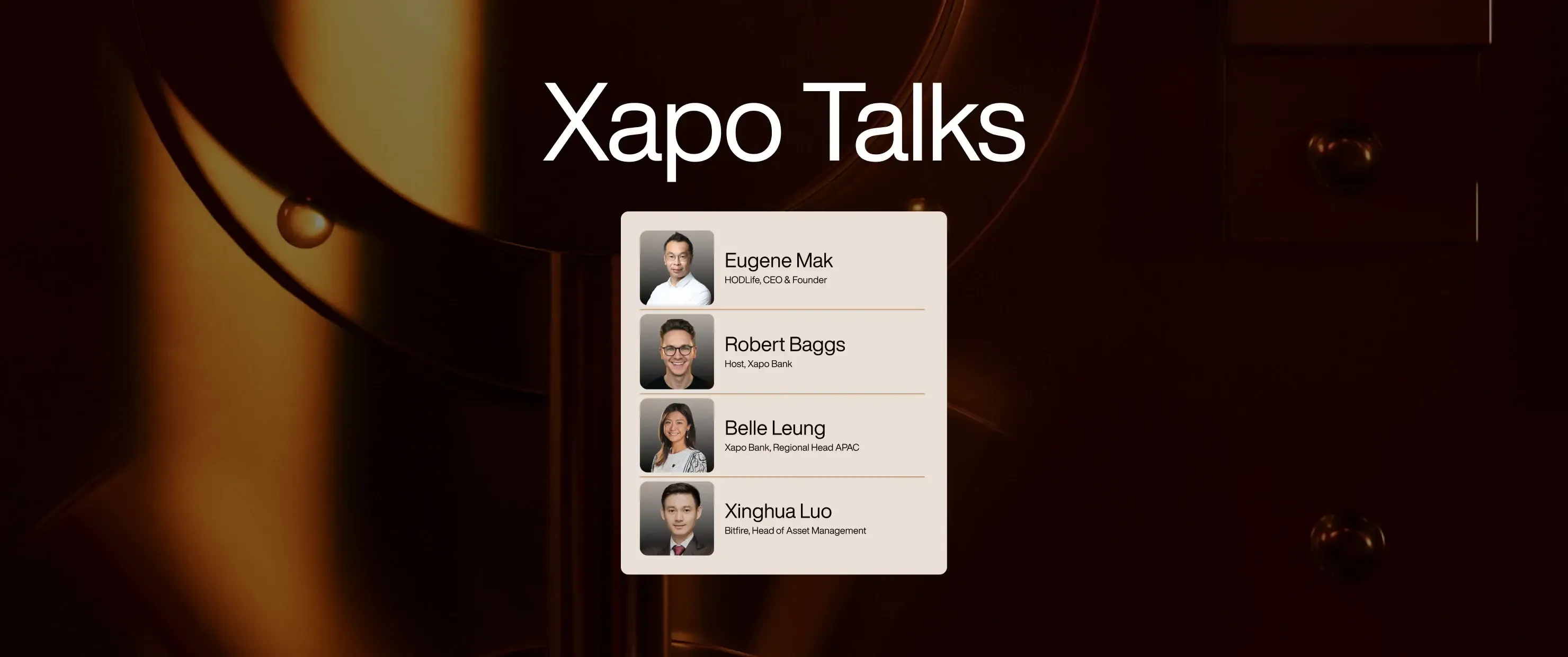
Xapo Bank’s Joey Garcia (Executive Director, Chief Digital Asset & Legal Officer) recently joined David Zell and Connor Brown of the Bitcoin Policy Institute for a conversation hosted by Cointelegraph's Robert Baggs. It ranged across policy, custody, and where Bitcoin is actually headed. Underneath the specifics, a few ideas kept surfacing that are worth pulling out on their own.
1. Bitcoin doesn't have an off switch, and that's the whole point.
Most rules written for digital assets assume there's someone to regulate. A team, a company, a foundation that can issue disclosures or be held accountable. Bitcoin doesn't have any of that. Nobody can update it unilaterally, freeze it, or speak for it. That's its entire value proposition. And it's also why applying securities-style rules to Bitcoin so often misses the mark. A useful way to think about it is what BPI’s David Zell says in his conversations with US policymakers: Bitcoin is basically gold you can email. Same scarcity and same bearer-asset independence from any single authority. It’s just easier to move. And history has a habit of rewarding that kind of openness: the Internet, the railroads, even gold itself all went through a phase of being treated as suspicious before the world reorganised around them.
2. You don't have to choose between holding your own keys and trusting someone else.
There's a tendency to treat self-custody and using a custodian as opposing camps. Some would suggest that real Bitcoin holders hold their own keys, and everyone else is doing it wrong. In practice, self-custody and custodians are different tools for different situations. Someone who wants full control and is comfortable managing that risk should have it. The recent , which quietly compromised keys generated by some of the most security-conscious holders for over five years, is a timely reminder of what "managing that risk" actually involves. Someone who wants a regulated setup, beneficiary planning, and support if something goes wrong should have that, too. The risk is that if they stop being able to talk to each other, they split into a regulated world cut off from the open network and an open network cut off from everyday financial life.
3. An ETF gets you Bitcoin's price. It doesn't get you Bitcoin.
Spot ETFs made it dramatically easier for money to flow into Bitcoin, and that's genuinely a good thing. But it's worth being clear-eyed about what you're actually buying: exposure to a number, not the asset itself. No self-custody, no ability to use it as money, none of the properties that make Bitcoin worth holding in the first place. And the fee tied to that convenience, even at a fraction of a percent, adds up over years in a way that's easy to underestimate if the price keeps climbing.
4. If you can't explain where a Bitcoin yield comes from, don't take it.
Every so often someone reinvents the same pitch: hand over your Bitcoin, get more Bitcoin back. It's worth remembering why that's easy to do with dollars and hard to do with Bitcoin. Banks can lend against a money supply that expands. Bitcoin's supply doesn't. So any yield on it has to come from a specific, explainable source. If nobody can tell you what that source is, you are the yield.
5. The biggest thing standing between Bitcoin and everyday use is taxes.
Paying for a coffee in Bitcoin currently means triggering a taxable event, which is a strange way to treat something you're trying to use as money. That's a policy problem, not a Bitcoin problem. But it's slowly starting to move, partly because usage itself is putting pressure on lawmakers. Millions of Americans are already using Bitcoin to pay for goods, and that number showing up in the data is doing more to change minds in Washington than any argument alone could.
In short: Bitcoin isn't crypto, and policy should reflect that
The conversations centered around the idea that Bitcoin plays by different rules than almost everything else in this space. Those differences have real consequences for how it should be regulated, held, and eventually used day to day. The people working on this from the policy side and the banking side are converging on the same conclusion: get the distinctions right now, and the rest — adoption, better products, sensible law — tends to follow.
Watch the full conversation, including more on Bitcoin's monetary history and the road ahead for policy in Washington.