
In under two months, Bitcoin’s recent record-breaking surge turned into a sharp, market-wide correction. Following an all-time high on October 7th, the price tumbled closer to $80,000 on November 21st.
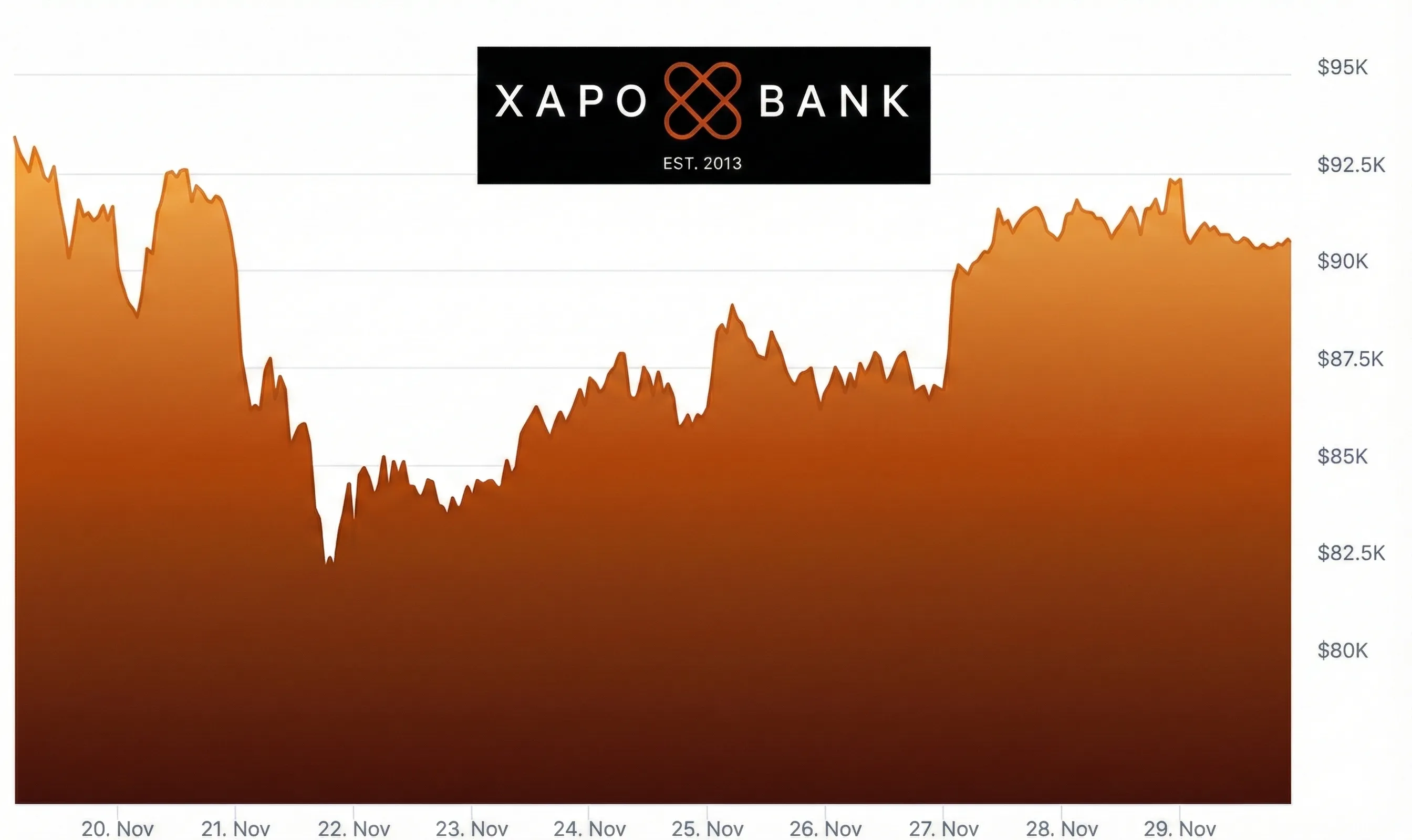
The graph above shows Bitcoin’s price dropping sharply, but ultimately recovering to similar levels in the span of 10 days.
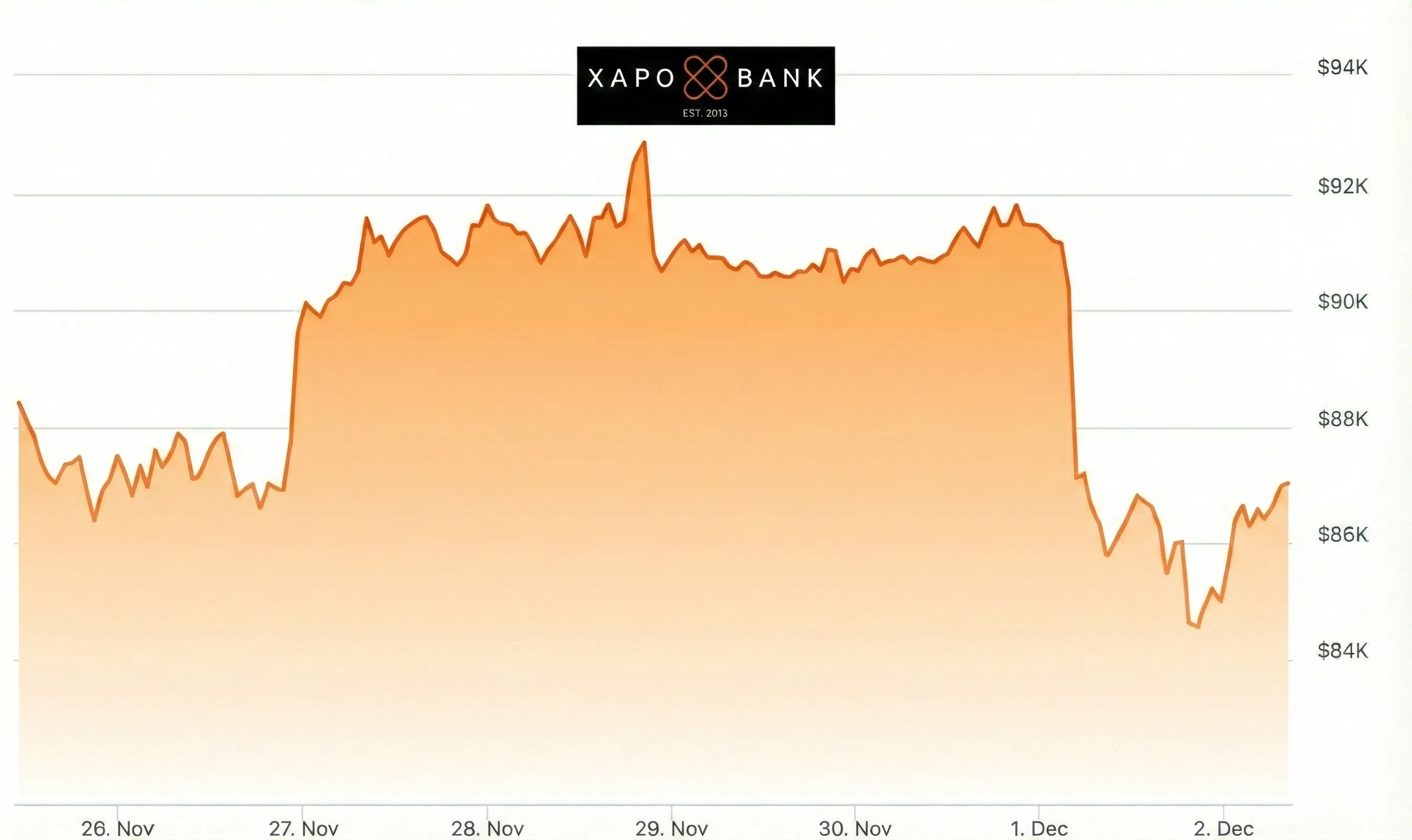
The graph above shows Bitcoin’s price stabilising before ultimately dropping below $90,000 again. However, as of December 3, the price has returned above the $90K mark.
Where we stand today
The price decline, which had led to renewed market volatility, appears to have been driven by macroeconomic factors rather than random chance or any specific negative news in the crypto space. Events such as the US government shutdown and a decline in technology company values appear to be behind Bitcoin’s price volatility.
After reaching a record high of approximately $126,000 in early October, Bitcoin experienced a sharp correction, breaking below the $100,000 mark by mid-November as selling pressure intensified. This volatility culminated on November 21st, when the price fell through key support levels to reach a low near $80,553.
However, the market has since shown resilience, with the price rebounding above $90,000 on multiple occasions, signalling that while the correction was steep, it remains within the bounds of historical market cycles.
What pushed Bitcoin’s price down?
While it is not always possible to pinpoint an exact event that moves Bitcoin’s price significantly, we can identify several factors related to the global financial situation:
US government shutdown: The US government shut down for 43 days, marking the longest shutdown in its history. Because of this, the government did not collect important economic data. The US central bank (the Federal Reserve) usually uses this data to decide on interest rates. Without this information, they had to make decisions "blind", creating uncertainty that made investors nervous and less willing to take risks.
Connection to tech stocks: Bitcoin has started to move in the same direction as technology stocks, specifically AI companies. Because many automated trading systems are set to sell Bitcoin automatically when tech stocks fall, when the stock price of Nvidia dropped, Bitcoin dropped with it.
Japan's economy: Bond yields in Japan rose to their highest level in decades. This caused some investors to sell foreign assets, including Bitcoin, to move their money back to Japan.
ETF selling: Earlier this year, large institutions bought Bitcoin through Exchange Traded Funds (ETFs). In November, these investors sold a record amount of Bitcoin. On a single day, over $903 million left these funds. This huge amount of selling forced the price down further.
Borrowed money: Many people who bought Bitcoin were using borrowed money. As prices fell, these investors sold quickly to repay loans, and this forced selling pushed values down even faster.
Bitcoin moves in cycles
We view the recent price drop and associated volatility as a normal part of the market cycle, rather than something new and unprecedented. Bitcoin acts in patterns of growth followed by corrections.
We know these cycles happen. We built our entire system to withstand these drops in price. This understanding of market swings is why we set strong limits on our loans.
Why Xapo sets loan limits (LTV) at 40%
We set our "Loan-to-Value" (LTV) limits at 40% to protect your assets. LTV is a simple calculation that compares the size of your loan to the value of the Bitcoin you hold as security. For example, if you hold $10,000 in Bitcoin, our 40% LTV lets you borrow $4,000.
We set this limit at 40% to protect your assets. Many other lenders offer limits between 50% and 90%. These high limits become dangerous when prices drop quickly. When the market falls, a high LTV leaves no room for error. The lender must sell your Bitcoin immediately to pay back the loan. This is called forced liquidation.
We saw this risk become real in November when Bitcoin’s price fell over 36%. Loans with high LTV ratios faced immediate stress during this shift. Our 40% limit creates a large safety buffer. This large safety margin allows the price to fluctuate without triggering an automatic sale of your Bitcoin.
We chose this number because we have operated in this industry since 2013. We design our rules to withstand these cycles.